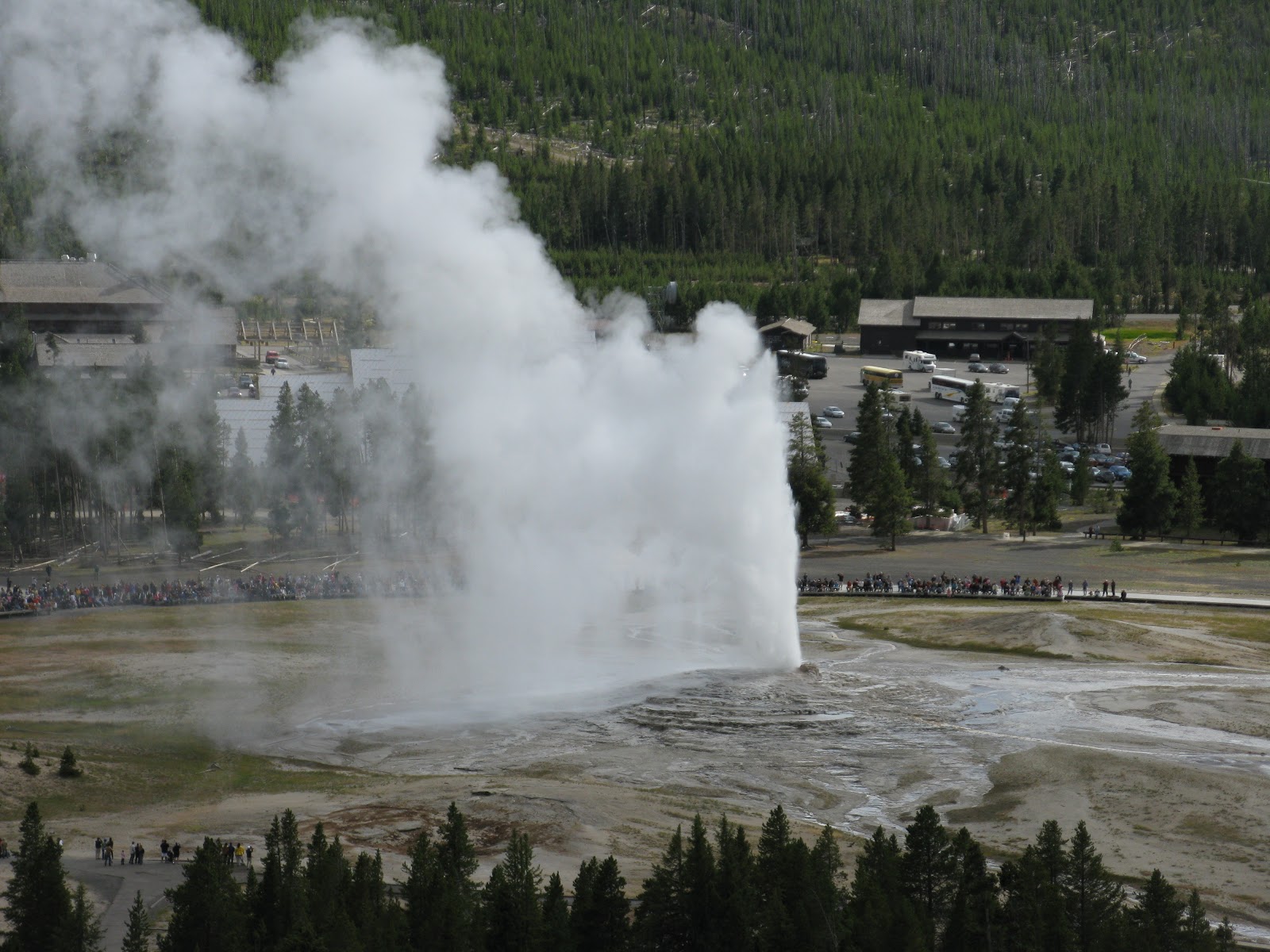
I have used this site for great free publications for several years. My favorites are Inside the Cell, The New Genetics, and The Structures of Life. The pictures are great, and the examples are current. I order a class set of these once a year, and give them to my students as a resource. If they turn them back to me at the end of the semester, then I give them a little extra credit. The booklets last longer that way, but the students can keep them if they want. Another good point is that the text and images are not copyrighted, so I can search their image gallery for amazing pictures like the one below, and use them in note sets or powerpoints.
http://www.nigms.nih.gov/Education/
Idaho Science Mom shares STEM outreach, local events, and experiments for families and teachers to share with their kids. I will also post grant opportunities, articles about STEM education, and fun activities in Idaho and beyond!
Thursday, January 19, 2012
Tuesday, January 17, 2012
New Semester is HERE!
As I start classes today, I am ready for a fresh start. I am slowly trying to incorporate new technology into my classroom. I am using iClickers this semester, and I might even change my online interface to chapter modules instead of categories, so that all my links and materials are in one place for each chapter.
Every teacher has favorite resources and activities, and my list gets longer every semester. But I am ready to share a great site...bozemanscience.com. This great teacher, Paul Andersen, teaches science in Montana, and was recognized as Teacher of the Year from that state. His science podcasts are succinct and easy to follow for the students. But I am enjoying his video logs that he posts directed at teachers and others. This particular vlog is a summary of his year as Teacher of the Year; what he learned and enjoyed and realized about the experience. I think it is a great message for teachers of all subjects, and he is a great resource for science teachers and students throughout the world. Enjoy! If only my blog had 12,000 hits a week! WOW!!!
http://www.bozemanscience.com/journal/2011/11/8/my-year-as-teacher-of-the-year.html
Monday, January 16, 2012
212 Movie...The Power of One Degree
I do like a good analogy, especially when it makes a connection between a scientific principle and a life lesson. This youtube clip was shared with me at a recent PTO meeting at my kids' school. The idea is that there is just one degree that separates hot water from boiling/steaming powerful water. Since I just did an outreach lesson about how cool water is, I thought it was time to share this Monday morning motivational message. Have a great week! Make the effort to go the extra "degree!"
http://www.212movie.com/
Sunday, January 15, 2012
New Idaho PTV D4K Episode this week! Geology Rocks!
It is time again for another great show from D4K. The topic this month is Geology, and it airs on Tuesday. I passed out more D4K calendars to the teachers at Dworshak, so I hope they send some questions in to Joan and get prizes!
http://idahoptv.org/dialogue4kids/season13/geology/
Thursday, January 12, 2012
Outreach at Dworshak Elementary
I had a good time with 2nd Graders today. We started with water experiments, and moved on to other fun liquids like vinegar, oil, and corn syrup. Of course I showed my lava lamp, and I wanted to show my readers how easy it is to make your own. Thanks to Mrs. Troxel for the invitation, and I hope the teachers check my blog for fun ideas and teacher resources.
Science Mom Lava Lamp
clear 2 liter bottle, cleaned
vegetable oil
colored water
alka-selzer tablets
Fill the bottle one-third full of the water, then the rest with oil. The oil is lighter (less dense) so it will float on top of the water...even if you put the oil in first.
Put an alka selzer tablet in the bottle, and keep the lid off. The bubbles will carry the colored water to the top of the oil, pop, then the water drops back down.
That's it! It is a great way to discuss density, chemical reactions, gases, and how to change a demonstration into a science fair project. Test different types of liquids or oils to see if the bubbles change!
Wednesday, January 11, 2012
Nicolas Steno...Father of Geology...honored on Google!
Take the Quiz embedded in this article to see if you are Science Literate! Thanks, Cheryl, for the link to this fun article!
How Nicolas Steno changed the way we see the world, literally
Nicolas Steno, father of geology, received a Google doodle Wednesday in honor of his 374th birthday.
By Chris Gaylord / January 11, 2012
Dig this: In 1669, Nicolas Steno rewrote the way people thought about the earth. Today, Google excavated his story for a special Google doodle tribute to the late geologist.
In 1669, Nicolas Steno rewrote the way people thought about the earth. And today, more than 300 years later, Google excavated his name from the history books for a special Google doodle tribute to the late (and perhaps first) geologist.
Our story starts in Florence, Italy, where Steno, then a budding physician, settled down after years of studying throughout western Europe. He had already challenged several long-held scientific assumptions, researched the changing shapes of muscles, and discovered an unknown body part in the heads of mammals. (He named it after himself, the "ductus stenonianus.")
He moved to Florence in 1665 to join the court of the Grand Duke of Tuscany, and collect for him a "cabinet of curiosity" – basically a room filled with natural wonders. Such collections fell somewhere between a carnival freak show and the basement of a university science department. Men such as Steno gathered, labeled, and displayed animals, vegetables, and minerals of all kinds.
So, when fishermen caught a massive great white shark in 1666, guess who got to dissect its head?
"While examining the teeth of the shark, Steno was struck by their resemblance to certain stony objects, called glossopetrae – literally 'tongue stones' – that were found in certain rocks," writes the University of California Museum of Paleontology in its biography of Steno. (See image above.) "Ancient authorities, such as the Roman author Pliny the Elder, had suggested that these stones fell from the sky or from the moon. Others were of the opinion, also going back to ancient times, that fossils naturally grew in the rocks."
These theories didn't make much sense to Steno. What if fossils came from ancient animals, he wondered. What if glossopetrae looked like shark teeth because they were shark teeth, deposited there when the rocks were covered with oceans?
This sounds pretty obvious to people today. But at the time, some scientists pooh-poohed the idea. If fossils were once bones, then how could they possibly have wound up lodged in rock? How could a solid, like stone, wrap around a solid, like teeth? Those are good questions, ones that bothered Steno as well. He decided that this required further research.
Three years after they caught the shark, Steno concluded that all rocks must have once been fluid and then solidified around and on top of fossils, veins of metal – or even older layers of rock. Since new rock keeps burying and sealing off old rock, then there must be horizontal layers, or strata, throughout the earth.
This idea helped explain a fundamental part of geology: the deeper you dig, the older the stone. "This was the first use of geology to try to distinguish different time periods in the Earth's history – an approach that would develop spectacularly in the work of later scientists," writes the UC museum. This allows modern geologist to make conclusions about the past, based on the depth of the rocks they study. The breakthrough is essential to the study of ancient human societies, dinosaurs, and historical climate change.
It also explains Wednesday's Google doodle. The colorful layers in each letter signify Steno's strata.
But there's another lesson in Steno's work: Never feel constrained by your current job or previous accomplishments. Who would have thought that the son of a Danish goldsmith could make major contributions to multiple, diverse fields? Curiosity has an interesting way of leading people to great, unexpected things.
Tuesday, January 10, 2012
DuPont Challenge Science Essay Contest
Submissions for this Essay Contest are due Jan 31. This is for students in 7-12 grades. I found this by reading through the NSTA Calendar from a Sept blog post. I am still amazed at the countless grants, contests, and opportunities available to STEM teachers. I strongly encourage all of us to take advantage of the money available to help our students, build up our classrooms, and get involved in national activities. You miss 100% of the shots you don't take!
http://thechallenge.dupont.com/
Subscribe to:
Posts (Atom)